May 6, 2026
Is Cooking Greek Dishes with a View the New Luxury?
There is no doubt that vacations all around the world offer a myriad of different experiences, out of the box, and into the relaxed, slow living fantasy. The type of vacation Anthony Bourdain would approve. When napping gets interrupted to prepare your dinner with your own hands, or where a morning swim pauses so you can sip coffee while learning how lunch is made from scratch. Let’s say, your dish of Greek, traditional Gemista. Yes, this is you taking cooking lessons during your 5-star resort stay.
Today, at Domes of Elounda, that dish is Gemista: one of Greece’s most beloved traditional recipes. Stuffed vegetables, usually peppers and tomatoes, filled with rice, herbs, olive oil, and the kind of humble ingredients that somehow become unforgettable when cooked slowly and shared generously.
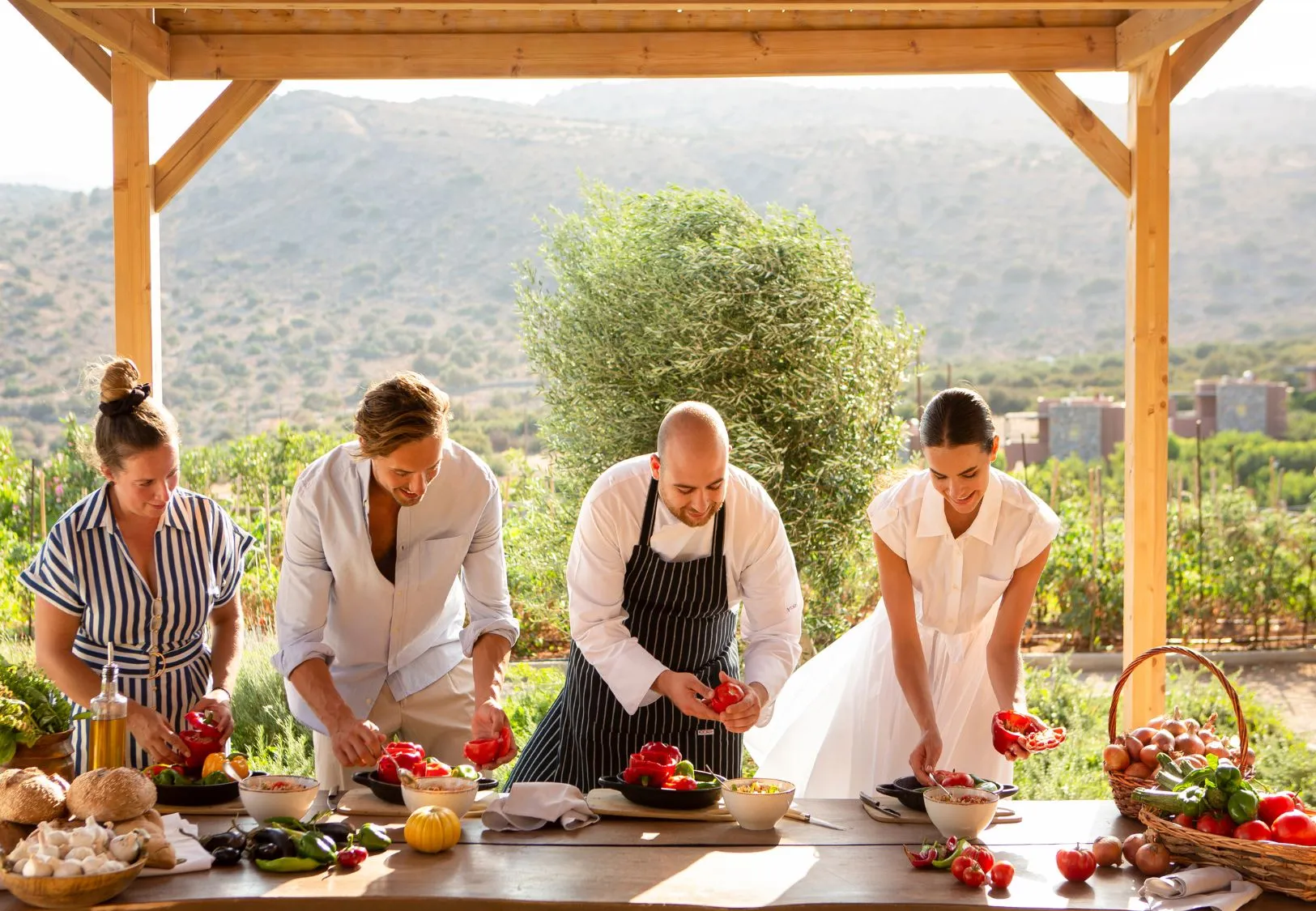
Crete is one of Greece’s greatest culinary hubs, renowned for dishes that celebrate local rituals, family occasions, and the island’s lush soil. And while Gemista belongs to the whole country, here it becomes deeply Cretan. The ingredients are gathered from the garden, the herbs are chosen by hand, and the view stretches toward the sea and Spinalonga. This is not just a cooking lesson. It is a way into Greek living.
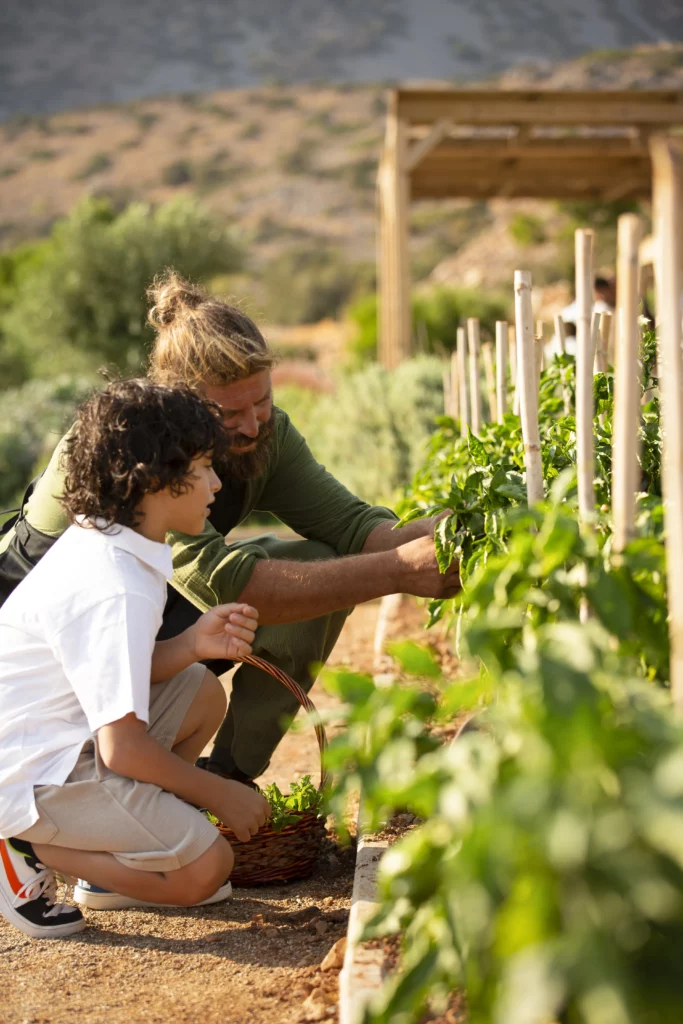
If you kept a diary, this is the day that would earn the most pages. You ask the concierge to not “orchestrate” an authentic experience, but rather for you to become part of one. The chef meets you in the garden, where the air is warm, the soil smells alive, and the herbs seem to announce the menu before anyone says a word. He shows you what to look for. Parsley for freshness, a touch of mint for some vividness, dill for that unmistakably Greek lift. You pick them slowly, rubbing the leaves between your fingers, letting the scent stay on your hands.
Your basket begins to fill. Bell peppers, ripe tomatoes, onions, herbs, and local olive oil. The chef explains that there is not just one way to make Gemista. Some families add minced meat. Some add pine nuts or raisins. Some keep the recipe completely vegan, letting the vegetables and herbs do all the talking. Today, you choose the vegan version, as summer asks for light, fragrant, and perfect for a table under the Cretan sun.
Back at the cooking spot, the sea glimmers, the mountains stand in the distance, and the kitchen feels open. Everyone gathers around. Children watch the chef slice the tops off the peppers. Someone else chops herbs. This is family-style cooking, not because it is casual, but because everyone has a role.
Ingredients for Vegan Greek Gemista
Bell peppers
Ripe tomatoes
Rice
Onions
Fresh parsley
Fresh mint
Fresh dill
Local olive oil
Salt
Pepper
Potatoes
Oregano
A little water
Optional: Greek yogurt or feta on the side
Is Cooking Greek Dishes with a View the New Luxury?
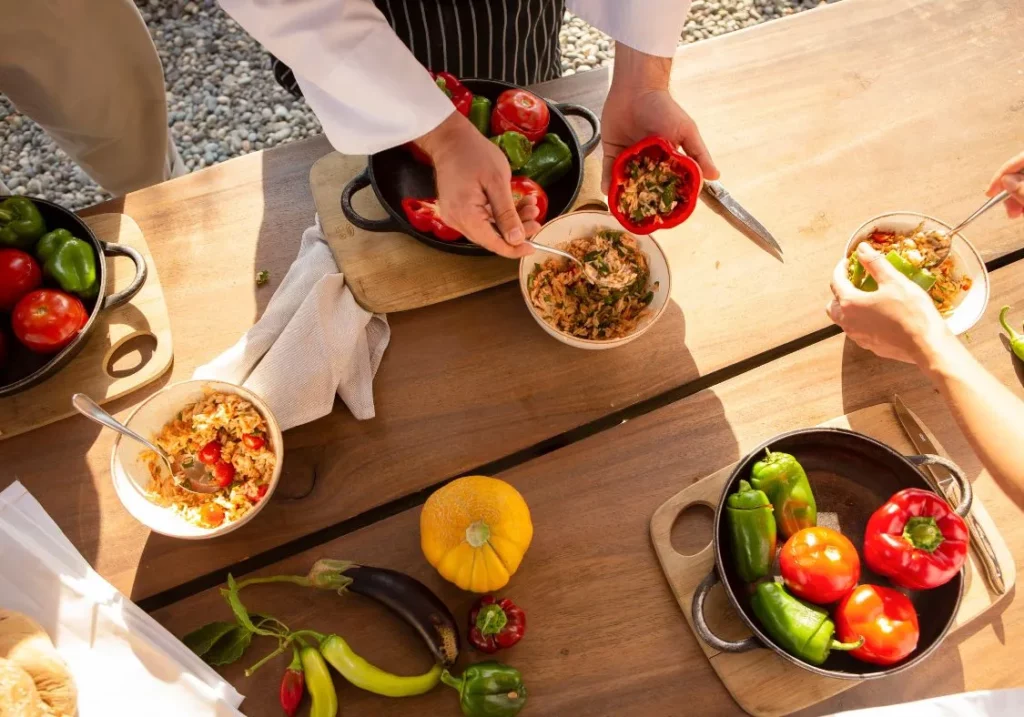
The chef begins with the vegetables. The peppers are opened carefully, their tops kept aside like little lids. Tomatoes are hollowed gently, their flesh saved for the filling. Nothing is wasted. In Greek kitchens, the best flavor often comes from what another kitchen might throw away.
Onion goes into the pan first with generous olive oil. It softens slowly, turning sweet. Then comes the rice, stirred through until it glistens. The chopped tomato flesh follows, along with grated fresh tomato, salt, pepper, and a little water to help everything loosen. Then the herbs arrive: parsley, mint, and dill, falling into the pan like confetti from the garden.
The scent changes immediately. It is green, warm, and nostalgic, even if you have never made the dish before.
The chef invites you to taste. The rice is not fully cooked yet, and that is the point. It will finish in the oven, absorbing the juices of the vegetables. The filling should be moist, fragrant, and slightly underdone. He reminds you that Greek cooking is rarely about strict perfection. It is about instinct, patience, and generosity.
You spoon the filling into the peppers and tomatoes, leaving a little room for the rice to expand. The lids go back on. The vegetables are placed pretty snugly in a baking dish, close together to remain in place. Potatoes are tucked between them, cut into wedges and dressed with olive oil, salt, and oregano. More olive oil is poured over everything, because this is Greece, and olive oil is not an extra. It is the foundation.
From the Oven to the Family Table
The Gemista goes into the oven, and the waiting becomes part of the ritual. This is where the experience at Domes of Elounda becomes more than a recipe. It belongs to a wider celebration of food, place, and memory. Today, luxury is the smell of tomatoes roasting. It is the look of olive oil bubbling at the edges of the pan.
The vegetables are tender now, slightly wrinkled and very aromatic. The rice has absorbed the tomato, herbs, and olive oil. The potatoes are golden at the edges. The dish is placed at the center of the table, not plated individually, because Gemista is meant to be shared.
You serve it warm, perhaps with Greek yogurt or feta on the side, perhaps with a glass of Cretan wine. The first bite is the whole essence of summer. You taste the garden, the sea air, the slow afternoon, the hands that helped prepare it.

And perhaps this is the new luxury, being invited closer. To the land. To the kitchen. To the story behind the dish.
And should this not be your cup of tea, Domes of Elounda offers indulgence of a different kind. You may enjoy the high-end service with impactful tastes of the Mediterranean, with a breathtaking view that spans until Spinalonga, without getting your hands “dirty”. You decide how your story in Crete will be written.
Words have many different meanings. So does the Domes experience.
Related Posts
What If You Could Wear The Essence Of The Greek Islands
more...
August 10, 2026

Chania Knows The Value Of Entertainment On Vacation
more...
August 5, 2026

The Most Private Spot in Santorini’s Busiest Hub
more...
August 3, 2026

This Greek Island Is That Last Minute Getaway
more...
July 28, 2026