May 17, 2022
What’s So Important With Spinalonga?
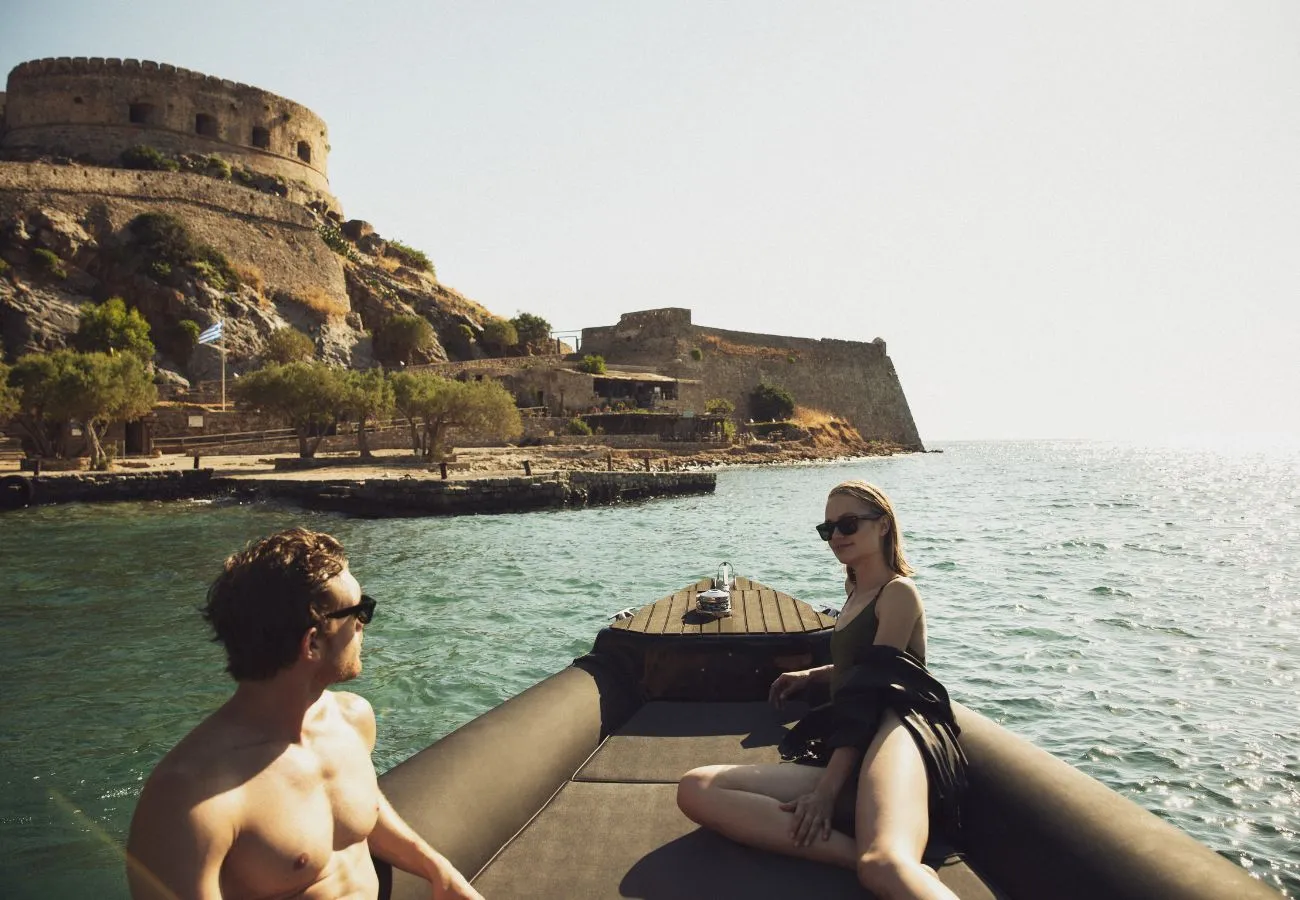
Brought back to life in Victoria Hislop’s novel “The Island,” Spinalonga islet’s poignant past continues to fascinate from its position across the water from Domes of Elounda, Autograph Collection.
Owing its name to Latin Spina [thorn] and longa [long], Spinalonga was not always an island, if Venetian cartographer Vincenzo Coronelli is to be believed; he recorded that the Venetians cut through a portion of the peninsula, creating an islet that measures 85 km² today. It was depopulated in the 7th century due to Arab pirate raids. In 1579, the Venetians built a fortress on the ruins of a pre-existing ancient fortress, which remained under Venetian rule even after the 1669 Ottoman occupation of Crete. The churches of Agios Panteleimonas and Agios Georgios were built subsequently. In fact, during the Cretan War (1645-1669), Spinalonga served as a base for refugees and rebels, consequently falling to the Turks in 1715. In the 19th century, several merchants and seamen moved to the islet, seeking the security offered by the fortress in their exploitation of the commercial routes of the eastern Mediterranean. It is estimated that by 1834, 80 families lived in Spinalonga. By 1881, the number had increased to 227 families.

From Ancient Greeks to Arab pirates, Ottomans to lepers and beyond, Spinalonga islet has a rich, profound history.
In 1903, the State of Crete decided that the island would house Crete’s leper community – it would go on to become a colony for lepers from all over Greece, overseen by a director, doctor, nurses, a superintendent, cleaning staff, a financial department and a priest. One of its two entrances was a tunnel known as “Dante’s Gate.” With the little government funding they received, patients were able to go down to the docks and buy produce from the surrounding area’s families, who arrived daily. Any products not sold on the day were considered contaminated, could not be taken back ashore and were therefore thrown away into the sea. Nevertheless, during this period, the leper colony supported the economy of the surrounding area. Patients were initially housed in existing buildings, while additional construction was carried out in the ‘30s. The Leper Hospital operated until 1957.
Today, visitors can reach Spinalonga via a scenic boat trip across the water to explore the remains of this historic settlement. In this eerie yet charming setting, the past renders the experience of wandering around the colony and learning about its history profound. Dilapidated but with restoration works underway, Spinalonga may be haunted by sadness and memories of tragic times but there is no doubt that it is a fascinating open-air museum worthy of a poignant visit that pays respect to its former inhabitants.
Words have many different meanings. So does the Domes experience.
Related Posts
That Is How Greek Hospitality Worships Gastronomy Now
more...
June 14, 2026

This Part of Crete Was Made for Long Conversations
more...
June 2, 2026
All The Cool Kids Head Towards Kassandra Chalkidiki This Summer
more...
May 29, 2026
Private Villas in Crete, But Make Them Feel Like Home
more...
May 26, 2026